

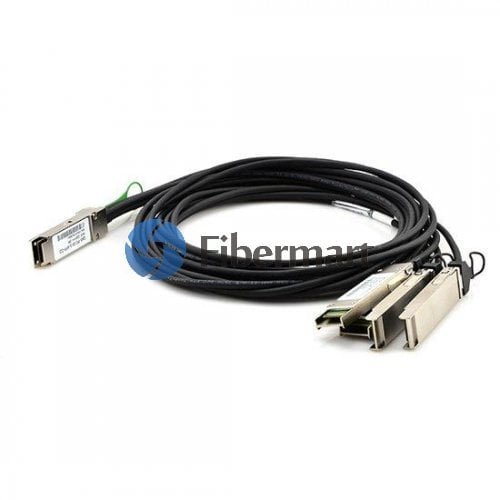
In today’s fast-paced digital world, the demand for faster and more reliable network connections is ever-increasing. Enterprises, data centers, and telecommunication providers require networking solutions that can handle high-speed data transmission with minimal latency. One of the key components enabling such high-performance networking is the QSFP28 harness cable. This advanced cabling solution plays a crucial role in modern network infrastructures, offering both efficiency and flexibility for a wide range of applications.
Understanding QSFP28 Harness Cables
A QSFP28 harness cable is a high-speed interconnect designed to support 100 Gigabit Ethernet (100GbE) networks. The term QSFP28 stands for Quad Small Form-factor Pluggable 28, which refers to the cable’s capability to transmit 28Gbps per channel across four lanes, totaling a potential 100Gbps. These cables are often used to connect switches, servers, and other network devices in data centers or enterprise networking environments.
Unlike traditional copper or fiber cables, QSFP28 harness cables combine multiple channels into a single, organized assembly. This design significantly reduces clutter in server racks and network cabinets, making them a preferred choice for modern high-density networking setups.
Advantages of Using QSFP28 Harness Cables
High-Speed Data Transmission
The primary advantage of QSFP28 harness cables is their ability to support ultra-high-speed data transfer. As data demands continue to grow with cloud computing, big data analytics, and artificial intelligence applications, network infrastructure must keep pace. QSFP28 harness cables ensure that data moves swiftly and efficiently, reducing latency and bottlenecks that could impact performance.
Space and Cable Management Efficiency
Data centers are constantly seeking ways to optimize space while maintaining high performance. QSFP28 harness cables provide an organized and compact solution by consolidating multiple individual connections into a single harness. This not only minimizes cable clutter but also simplifies maintenance and upgrades, allowing network administrators to manage connections more efficiently.
Reliability and Signal Integrity
Maintaining signal integrity is critical in high-speed networks. QSFP28 harness cables are engineered to reduce crosstalk, attenuation, and electromagnetic interference (EMI). Their precise construction ensures that high-frequency signals are transmitted without degradation, offering consistent performance across all connected devices. For businesses relying on mission-critical applications, this reliability is invaluable.
Flexibility in Network Design
QSFP28 harness cables offer flexibility that is essential for modern data centers. Available in various lengths and configurations, they can be tailored to fit specific network layouts. Whether it’s a short connection between servers within a rack or a longer link across multiple racks, these harness cables provide the versatility required for complex networking topologies.
Applications of QSFP28 Harness Cables
Data Center Interconnections
Modern data centers require high-density, high-speed connectivity between switches, servers, and storage devices. QSFP28 harness cables are ideal for these environments because they support 100GbE links while minimizing physical space usage. Their modular design allows for easy integration into existing infrastructures, helping data centers scale efficiently as demand increases.
High-Performance Computing
High-performance computing (HPC) clusters demand low-latency and high-bandwidth connections to perform complex computations. QSFP28 harness cables enable seamless communication between nodes in HPC clusters, ensuring that data-intensive workloads are handled quickly and accurately. This makes them essential components in research facilities, financial modeling, and scientific simulations.
Cloud and Enterprise Networks
With cloud computing and enterprise networks expanding rapidly, reliable and fast interconnects are critical. QSFP28 harness cables facilitate efficient network traffic flow, supporting virtualization, storage area networks (SANs), and other enterprise applications. By ensuring stable connections, these cables help maintain productivity and reduce downtime in critical business operations.
Choosing the Right QSFP28 Harness Cable
When selecting a QSFP28 harness cable, several factors must be considered to ensure optimal performance. Fiber-mart, a trusted provider in the networking industry, offers a range of QSFP28 harness cables designed to meet the diverse needs of modern networks.
Cable Length and Configuration
The distance between devices and the layout of your network should determine the cable length. Fiber-mart provides various configurations, allowing network engineers to choose harness cables that minimize excess slack while ensuring efficient connectivity.
Compatibility and Standards
Ensuring that QSFP28 harness cables are compatible with your existing network devices is crucial. Fiber-mart’s cables adhere to industry standards, guaranteeing interoperability with switches, routers, and servers. This compatibility reduces the risk of connection issues and signal degradation.
Quality and Durability
High-quality construction is essential for maintaining long-term network performance. Fiber-mart’s QSFP28 harness cables are manufactured using premium materials that resist wear and environmental factors. This durability ensures consistent performance, even in demanding data center conditions.
Installation Best Practices
Proper installation of QSFP28 harness cables can significantly impact network performance. Organizing cables using cable management trays or racks prevents tangling and reduces the risk of accidental disconnections. Additionally, avoiding sharp bends and excessive tension helps maintain signal integrity over time. Fiber-mart provides detailed guidelines to ensure that their harness cables are installed correctly, maximizing both performance and lifespan.
Future-Proofing Your Network
As networking demands continue to grow, investing in scalable and high-speed solutions like QSFP28 harness cables is a proactive approach. These cables not only meet current 100GbE requirements but also provide the flexibility to support future upgrades, such as 200GbE or 400GbE, depending on the network’s evolution. By choosing reliable providers like Fiber-mart, businesses can ensure that their network infrastructure remains efficient and adaptable for years to come.
Conclusion
QSFP28 harness cables have become indispensable in modern networking due to their high-speed capabilities, space-saving design, and reliable performance. From data centers and HPC clusters to enterprise and cloud networks, these cables provide the backbone for efficient and scalable connectivity. By selecting high-quality cables from trusted providers like Fiber-mart, organizations can optimize their network performance, simplify management, and future-proof their infrastructure. In an era where speed and reliability define success, QSFP28 harness cables are more than just cables—they are the foundation of modern networking.